
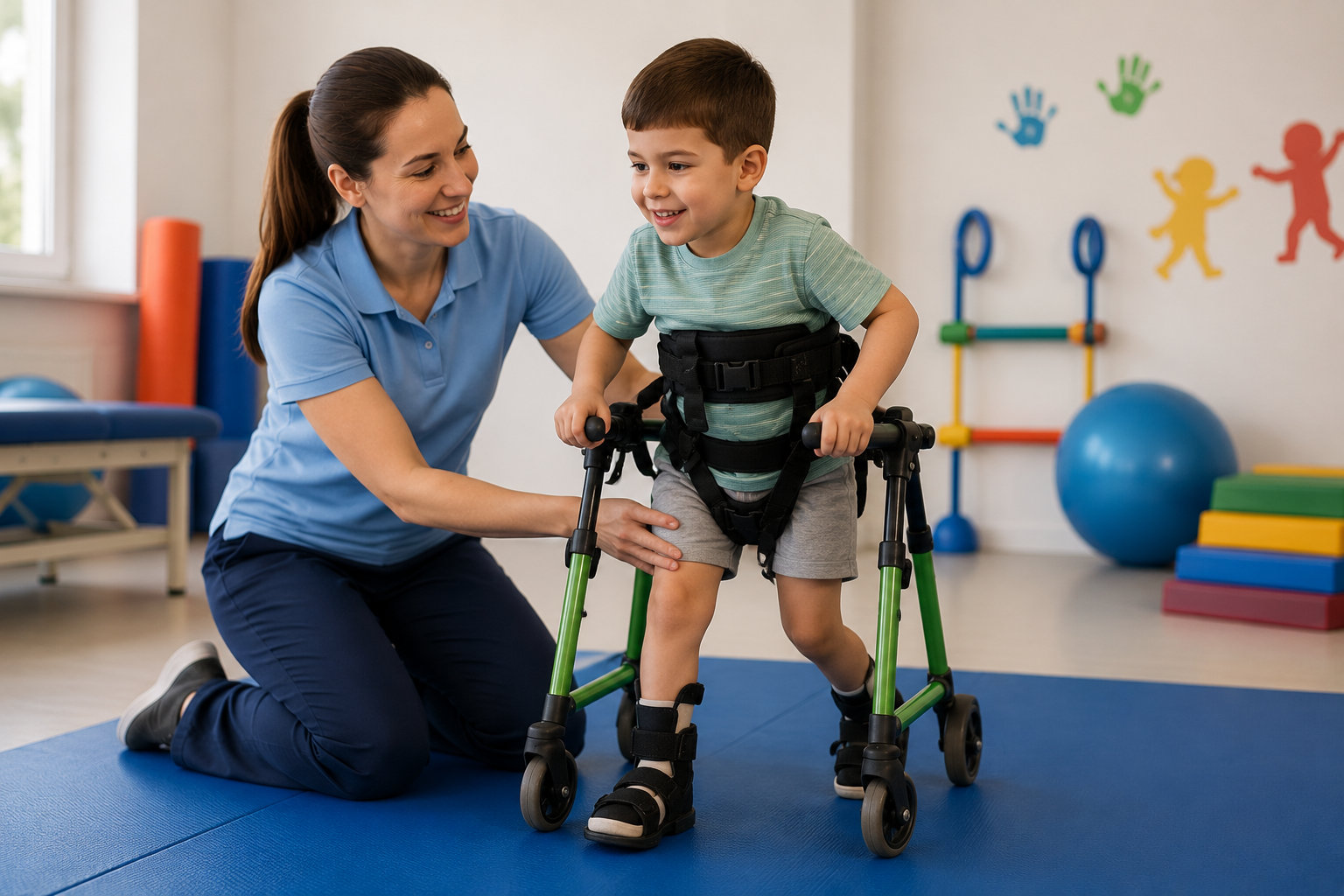
Cerebral Palsy in Children: How Paediatric Physiotherapy Supports Mobility and Independence
Expert paediatric physiotherapy for children with cerebral palsy in Sydney. Our mobile physio service delivers individualised, evidence-based care to support mobility, function, and independence — at home.
Understanding Cerebral Palsy
Cerebral palsy (CP) is the most common physical disability in childhood — affecting approximately 1 in 500 live births in Australia. It is a group of permanent disorders affecting movement and posture, resulting from a non-progressive disturbance to the developing brain during pregnancy, birth, or early life.
While cerebral palsy itself does not worsen over time, its effects on the body can change significantly as a child grows — which is why ongoing, expert physiotherapy is so important.
As mobile paediatric physiotherapists serving families across Sydney, we are deeply committed to providing individualised, evidence-based physiotherapy that supports each child with CP to reach their full potential — in the comfort and familiarity of their own home.
Types of Cerebral Palsy
Understanding the type of CP your child has helps guide physiotherapy:
Spastic CP (85–91% of cases)
Characterised by increased muscle tone (spasticity) — muscles are stiff and tight, which can affect movement efficiency and cause contractures over time. Can affect one side of the body (hemiplegia) or both sides (diplegia or quadriplegia).
Dyskinetic CP (4–7% of cases)
Involuntary, uncontrolled movements — including dystonia (sustained muscle contractions causing twisting movements) and athetosis (slow, writhing movements).
Ataxic CP (4–6% of cases)
Primarily affects balance and coordination, causing an unsteady, wide-based gait.
Hypotonic CP (approx. 2%)
Low muscle tone, which can affect posture, movement, and strength.
Many children have a mixed type, combining features of more than one category.
The Importance of Early and Ongoing Physiotherapy
The brain is most neuroplastic — most able to reorganise and form new connections — in the early years of life. This is why early diagnosis and early intervention are central to best practice in CP management.
Research published in leading neurodevelopmental journals confirms that waiting for a diagnosis before commencing therapy is no longer the standard of care. When a child is identified as “high risk” for CP — even before a confirmed diagnosis — specific, targeted intervention should begin immediately.
Current best-practice guidelines recommend task-specific, goal-directed, and active physiotherapy — approaches that harness the brain’s plasticity through meaningful, repeated movement practice. Evidence strongly recommends againstpassive, therapist-controlled handling as the primary approach.
The benefits of early intervention are well-documented: improved motor outcomes, better functional independence, and a reduced need for surgical or medical intervention later in life.
What Does Physiotherapy for Cerebral Palsy Look Like?
Our approach is individualised — no two children with CP are the same. We take the time to understand your child’s specific profile, your family’s goals, and what matters most to your child in their daily life.
Comprehensive Assessment
We assess muscle tone, joint range of motion, strength, balance, gait, postural control, and functional movement. We use validated tools to understand your child’s current level of function and set meaningful goals.
Goal-Directed Therapy
Physiotherapy sessions are built around real-life goals — things your child wants and needs to do. Whether that’s walking to the letterbox, climbing onto the couch independently, or participating in PE at school, we target therapy to meaningful outcomes.
Task-Specific Training
We use active, repeated practice of real tasks — the most evidence-based approach to improving motor skills in CP. Your child is an active participant in their own therapy, not a passive recipient.
Strengthening
Muscle weakness is a significant contributor to functional limitations in CP. We prescribe progressive, appropriate strengthening exercises woven into play and daily activities.
Constraint-Induced Movement Therapy (CIMT)
For children with hemiplegic (unilateral) CP, CIMT — which involves encouraging use of the more affected hand through structured practice — has strong evidence for improving hand function. We can incorporate CIMT principles into our mobile therapy.
Spasticity and Tone Management
We work collaboratively with your child’s medical team — including paediatricians and neurologists — to support tone management strategies including Botulinum Toxin (Botox) therapy programmes, ankle-foot orthoses (AFOs), and post-Selective Dorsal Rhizotomy (SDR) rehabilitation.
Hip Surveillance and Musculoskeletal Health
Hip displacement is a significant concern for children with CP (particularly those who are non-ambulatory), occurring in up to 28% of individuals. We monitor hip health as part of our ongoing physiotherapy and support families in understanding their child’s hip surveillance program.
Family Coaching and Home Programs
Physiotherapy gains are amplified when practice occurs throughout the day — not just in therapy sessions. We coach parents and carers to integrate therapeutic movement into everyday life: dressing, bath time, mealtimes, and play.
Supporting the Whole Child
Cerebral palsy frequently co-occurs with other conditions that can affect your child’s quality of life — including pain, epilepsy, intellectual disability, and feeding difficulties. Our physiotherapy is part of a broader multidisciplinary picture, and we work closely with other treating professionals to ensure coordinated, holistic care.
We also recognise the significant impact of a CP diagnosis on families. We are here not just to support your child physically, but to provide clear information, realistic goal-setting, and compassionate care that respects your family’s values and priorities.
Mobile CP Physiotherapy Across Sydney
We provide mobile physiotherapy for children with cerebral palsy across Sydney — from infants through to teenagers. Treating your child at home means they are in a familiar environment, equipment and aids are immediately accessible, and we can see how your child functions in their real-world setting.
Frequently Asked Questions
How early should physiotherapy begin for a child with CP? As early as possible. Current evidence strongly supports beginning CP-specific intervention as soon as the diagnosis — or a “high risk of CP” — is identified, even in the first months of life. Early intervention maximises neuroplasticity.
Will my child always need physiotherapy? Physiotherapy needs change over a child’s life. Some periods require intensive input; others require monitoring and maintenance. We’ll work with your family to plan the right level of support at each stage.
Can physiotherapy help a child with CP walk? It depends on the type and severity of CP. Two in three people with CP are ambulatory (able to walk). Physiotherapy plays a critical role in optimising walking ability, efficiency, and safety — and in maximising function for children who use walking aids or wheelchairs.
How is mobile physio different from clinic-based CP therapy? Mobile therapy allows us to treat your child in the environment where they actually live and move. This often leads to more practical, immediately applicable therapy and removes the barrier of transport — which can be significant for families managing complex needs.
Book a Home Visit in Sydney
Our mobile paediatric physiotherapists are experienced in the individualised management of cerebral palsy across the lifespan. We are committed to helping your child move better, function more independently, and live fully.
📞 Call us or book online for a home visit anywhere in Sydney.
Specialist CP physiotherapy. Delivered to your door.