
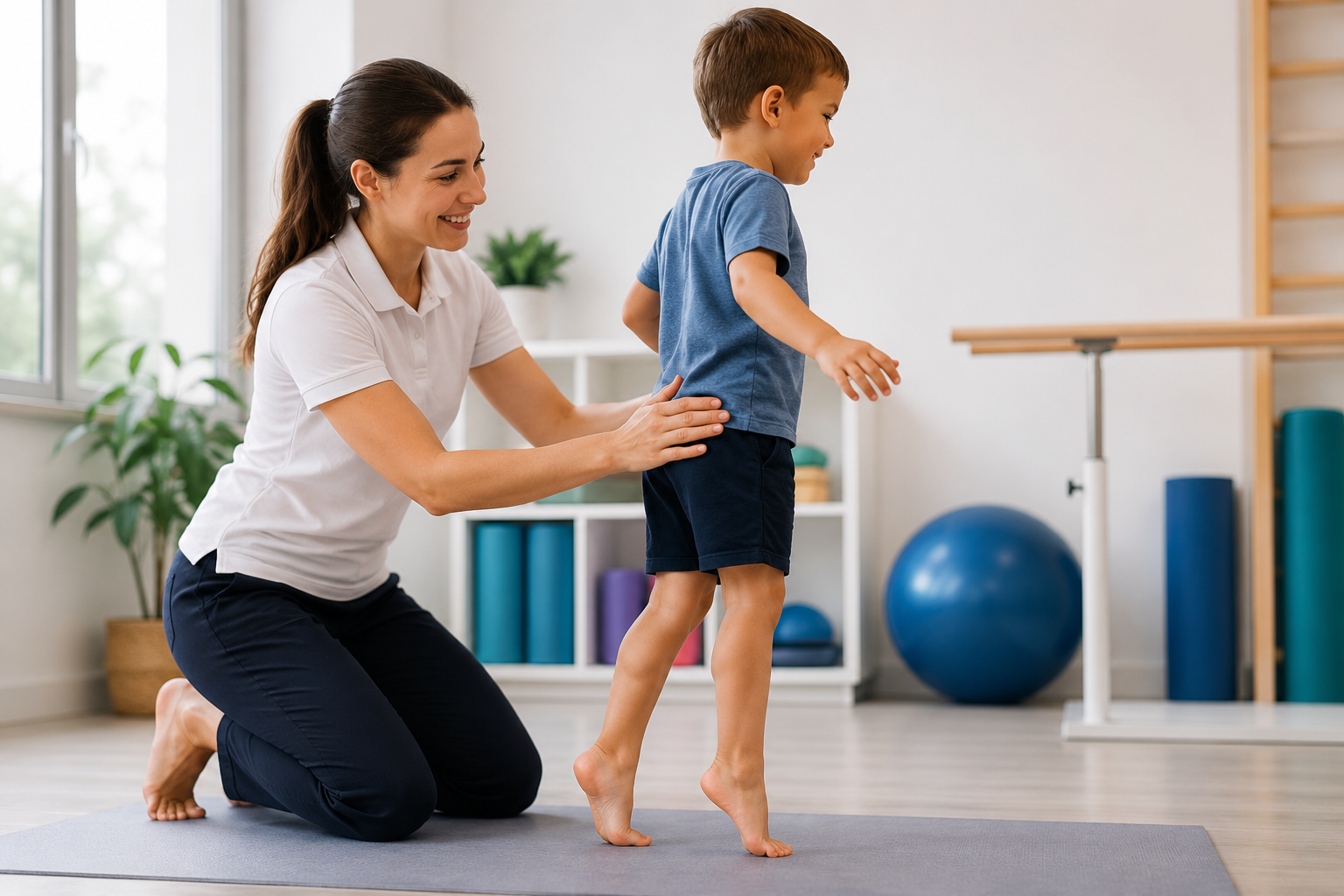
Toe Walking in Children: What It Means and When to See a Physiotherapist
Does your child always walk on their tiptoes? Learn about toe walking causes, when it’s a concern, and how mobile paediatric physiotherapy in Sydney can help assess and treat persistent toe walking.
What Is Toe Walking?
Toe walking — where a child consistently walks on the balls of their feet or tiptoes rather than with a heel-toe pattern — is something many parents notice and wonder about. While it can be a completely normal part of early walking development, persistent toe walking beyond age 2–3 warrants assessment by a paediatric physiotherapist.
As a mobile paediatric physio service across Sydney, we regularly assess and treat children who toe walk, providing families with clear answers and effective, evidence-based care — right in your own home.
Is Toe Walking Normal?
In the early stages of learning to walk (typically 12–18 months), many toddlers experiment with toe walking. This is generally considered a normal part of gait development. However, if your child:
- Consistently walks on their toes past the age of 2
- Cannot lower their heels to the floor when asked
- Has tight calf muscles or a reduced range of ankle movement
- Shows asymmetry — toe walking on one side only
- Has other developmental concerns alongside toe walking
…then a physiotherapy assessment is recommended.
Why Do Children Toe Walk?
There are several reasons a child may toe walk, and understanding the cause is essential for effective treatment:
Idiopathic Toe Walking (ITW)
The most common type, where no underlying cause is identified. Children with ITW tend to have tight calf muscles and a preference for the toe-toe pattern. It can run in families and is generally very responsive to physiotherapy.
Sensory Processing
Some children toe walk due to sensory sensitivities — they may find the sensation of their full foot on the floor uncomfortable or overwhelming. This is often associated with autism spectrum disorder (ASD) or sensory processing differences.
Neurological Causes
Toe walking can be associated with conditions such as cerebral palsy, where increased muscle tone (spasticity) affects the calf muscles and Achilles tendon. In these cases, a heel-toe pattern may simply not be accessible without targeted intervention.
Structural Causes
Less commonly, a shortened Achilles tendon or structural foot issue may prevent the heel from reaching the floor.
How Is Toe Walking Assessed?
Our assessment begins at your home — no clinic required. We’ll evaluate:
- Walking and running patterns (gait analysis)
- Ankle range of motion — both active and passive
- Calf muscle length and strength
- Hip and knee mechanics
- Foot posture and arch development
- Sensory responses and broader developmental history
We also take time to understand your child’s history, any family history of toe walking, and whether there are any other developmental concerns.
How Does Physiotherapy Treat Toe Walking?
The treatment approach is tailored to the underlying cause, but typically includes:
Stretching and Range of Motion Exercises
We target the calf muscles and Achilles tendon with specific, child-friendly stretches. For young children, these are woven into play activities so they don’t feel like “exercises” at all.
Strengthening
Building strength through the feet, ankles, and lower legs helps support a more typical walking pattern.
Gait Retraining
We work on heel-toe walking patterns through fun, play-based activities — walking on different surfaces, barefoot activities, obstacle courses, and movement games.
Orthotics and Serial Casting
In some cases, we may refer for ankle-foot orthoses (AFOs) or recommend serial casting to improve ankle range of motion. We work collaboratively with orthotists to ensure the best outcome.
Sensory Strategies
Where sensory processing plays a role, we incorporate sensory desensitisation strategies to help your child become more comfortable with full foot contact.
When Should I Be Concerned?
Seek an assessment sooner rather than later if:
- Your child is over 2 years and always toe walks
- They cannot put their heels flat on the floor when standing
- Toe walking appears on one side only
- There are other signs of motor or developmental delay
- You have a family history of toe walking that caused long-term problems
Left untreated, persistent toe walking can lead to shortened calf muscles, altered movement patterns throughout the body, and difficulties with balance and coordination.
Mobile Physiotherapy for Toe Walking — Sydney
We come to you. Whether you’re in the Hills District, Inner West, Northern Beaches, or the South, our mobile paediatric physiotherapy service brings expert assessment and treatment to your home.
Treating toe walking in a familiar environment means your child is relaxed and engaged, giving us the most accurate picture of how they naturally move.
Frequently Asked Questions
Will my child grow out of toe walking? Some children do, but many do not — particularly if it persists past age 2 or if there is an underlying cause. Early assessment ensures you’re not waiting and hoping when treatment could be making a difference.
Does toe walking mean my child has autism? Not necessarily. While toe walking is more common in children with autism, the majority of children who toe walk do not have an autism diagnosis. Our assessment will help clarify the picture.
How many sessions will my child need? This depends on the cause and severity. Some children respond quickly to a structured exercise program; others require longer-term support. We’ll give you a realistic plan at the initial assessment.
Can adults still be treated for childhood toe walking? Yes, though earlier intervention tends to produce better outcomes. If untreated childhood toe walking has caused ongoing issues, physiotherapy can still help.
Book Your Sydney Home Visit Today
Our mobile paediatric physiotherapists are experienced in assessing and treating toe walking in children of all ages. We’ll give you a clear explanation of what’s happening and a practical treatment plan.
📞 Call us or book online for a home visit anywhere in Sydney.
Expert paediatric physio, delivered to your door.