
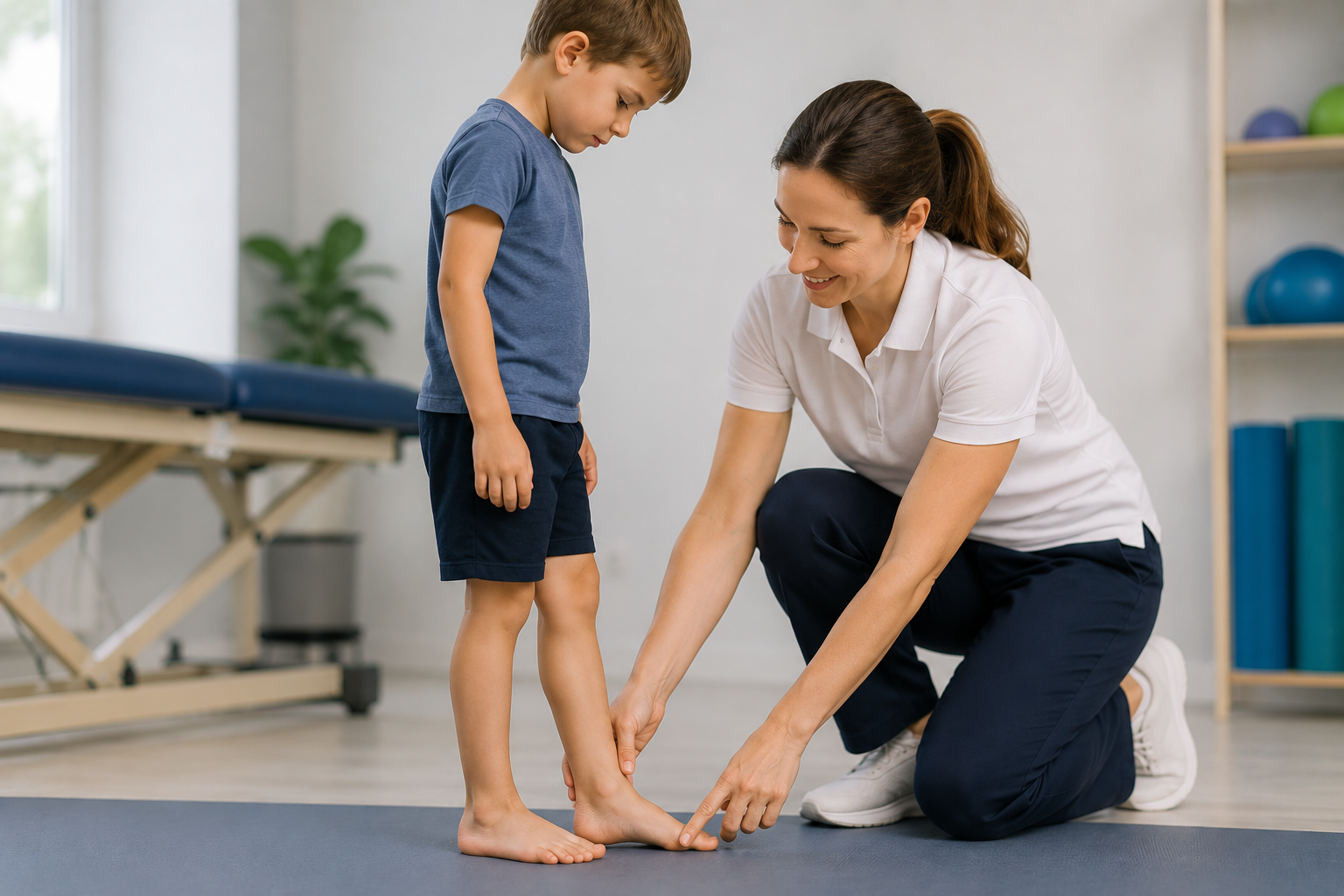
Flat Feet in Children: What’s Normal, What’s Not, and How Physiotherapy Can Help
Flat feet in children — when should you worry? Our mobile paediatric physiotherapists in Sydney assess children’s foot development and provide evidence-based treatment at home. Learn more.
Do All Children Have Flat Feet?
Yes — and that’s completely normal. All babies are born with flat feet. The arch of the foot develops gradually during childhood, typically becoming visible by around age 6. Before that, a fat pad under the foot naturally fills in the arch, giving the appearance of flat feet even when the foot structure is developing perfectly.
So when do flat feet become something to pay attention to? That’s exactly what this blog unpacks — and as mobile paediatric physiotherapists servicing families across Sydney, it’s a question we get asked all the time.
Understanding Flat Feet (Pes Planus)
Flat feet — medically known as pes planus — refers to a reduced or absent arch on the inner side of the foot. There are two main types:
Flexible Flat Feet
The most common type. The arch is present when the child is sitting or standing on tiptoe but disappears when they stand with their full weight. This is generally considered a normal variant, especially in young children, and often requires no treatment beyond monitoring.
Rigid Flat Feet
The arch is absent in all positions — whether sitting, standing, or on tiptoe. This type is less common and may indicate an underlying structural issue such as tarsal coalition (fused foot bones). Rigid flat feet typically require further investigation.
When Are Flat Feet a Problem?
Flat feet only become a clinical concern if they are causing symptoms or affecting function. Signs that your child’s flat feet may need attention include:
- Pain in the feet, ankles, knees, hips, or lower back
- Fatigue with walking or physical activity — tiring quickly or frequently wanting to be carried
- Difficulty with footwear — shoes wearing unevenly or not fitting well
- Avoidance of physical activity due to discomfort
- Clumsiness or frequent tripping
- Asymmetry — one foot appears noticeably flatter than the other
- Flat feet that persist beyond age 6–8 without any arch development
If your child is reporting pain or avoiding activity, it’s worth getting their feet assessed — even if their flat feet appear mild.
The Knock-On Effect of Flat Feet
The feet are the foundation of movement. When the arch is absent, the foot can overpronate (roll inward), which affects the alignment of the entire lower limb. This can contribute to:
- Knee pain — particularly at the front of the knee
- Hip pain — altered lower limb mechanics affecting hip loading
- Lower back pain — especially in older children and adolescents
- Altered gait patterns — affecting running efficiency and endurance
Understanding how your child’s feet are influencing the rest of their body is a key part of our physiotherapy assessment.
What Does a Physiotherapy Assessment for Flat Feet Include?
Our mobile physiotherapy assessment is thorough and child-friendly. We evaluate:
- Foot posture and arch height — in sitting, standing, and on tiptoe
- Ankle range of motion — particularly dorsiflexion (upward movement), as tight calf muscles are often associated with flat feet
- Lower limb alignment — checking how the knees and hips are positioned
- Gait analysis — watching your child walk and run to understand how the feet function in motion
- Footwear — assessing whether current shoes are supporting healthy foot development
- Strength — particularly of the foot’s intrinsic muscles and lower leg
We take a detailed history including when the flat feet were first noticed, any family history, associated pain or discomfort, and activity levels.
How Is Flat Foot Treated with Physiotherapy?
Treatment depends entirely on what the assessment reveals. For many children, reassurance and monitoring is all that’s needed. For those requiring active management, treatment may include:
Strengthening Exercises
Targeted exercises to strengthen the intrinsic muscles of the foot and the muscles that support the arch. These are incorporated into games and play activities appropriate to your child’s age.
Calf and Lower Leg Stretching
Tight calf muscles and Achilles tendons are common contributors to flat feet. Improving flexibility in these areas can allow the foot to function more efficiently.
Footwear Advice
Good supportive footwear plays an important role in managing flat feet. We provide practical, specific advice on what to look for in children’s shoes — and what to avoid.
Orthotic Referral
Where indicated, we may recommend a referral for custom or prefabricated orthotics to provide arch support and improve lower limb alignment. We’ll explain who is and isn’t a good candidate for orthotics, as they are not always necessary.
Activity Modification
For children experiencing pain, we’ll provide guidance on managing activity levels while building the strength and mobility needed for long-term improvement.
Mobile Paediatric Physiotherapy for Flat Feet in Sydney
We visit your home across Sydney, making specialist paediatric physiotherapy accessible without the need for long travel or clinic waiting rooms. Your child can be assessed in their own environment — comfortable, relaxed, and in familiar surroundings.
Frequently Asked Questions
My child’s feet look flat — should I be worried? Not automatically. Flat feet are normal in young children. If there is no pain, no functional impact, and your child is under 6, it’s very likely a normal part of development. If you’re unsure, we’re happy to assess.
Do flat feet require orthotics? Not always. Many children with flat feet do not require orthotics. Where orthotics are appropriate, they are most effective when combined with physiotherapy exercises.
Can physiotherapy improve the arch of the foot? Physiotherapy can improve the function of the foot and strengthen the muscles that support the arch. In younger children with flexible flat feet, targeted therapy can support the development of a more functional arch over time.
At what age should I have my child’s flat feet assessed? If your child is under 6 and has no pain or functional concerns, monitoring is usually appropriate. If they are experiencing any discomfort, fatigue, or difficulty with activity, an assessment at any age is worthwhile.
Book a Home Visit Across Sydney
Our mobile paediatric physiotherapists can assess your child’s flat feet and give you clear, practical guidance. No clinic needed — we come to you.
📞 Call us or book online for a home visit anywhere in Sydney.
Healthy feet. Happy kids. Expert care at home.